.png)
Nanjing, the capital of Jiangsu Province, China, is located in the lower reaches of the Yangtze River. As one of China’s Four Great Ancient Capitals, Nanjing has a history of nearly 2,500 years as a city and approximately 450 years as a national capital. Nanjing served as the capital of six dynasties—the Eastern Wu, Eastern Jin, Liu Song, Southern Qi, Liang, and Chen—and is therefore known as the “Ancient Capital of the Six Dynasties.” It later served as the capital of the Southern Tang, Ming Dynasty, Taiping Heavenly Kingdom, and Republic of China, earning it the title of the “Ancient Capital of Ten Dynasties.” Nanjing is the only city in China to have been designated a “City of Literature” by UNESCO. It is also an important center for education, science, and research, as well as a major transportation hub in China. With its mountains, rivers, urban landscapes, and forests seamlessly integrated, Nanjing combines a rich historical heritage with the vitality of a modern metropolis.
The legacy of its nearly 450-year history as a national capital forms one of the defining characteristics of Nanjing. This long history has left the city with a rich concentration of historical sites and cultural heritage. The Eastern Wu, Eastern Jin, and the Southern Dynasties of Liu Song, Southern Qi, Liang, and Chen successively established their capitals in Nanjing, spanning a total of 324 years. This period gave rise to the renowned title “Ancient Capital of the Six Dynasties” and helped shape Nanjing’s distinctive cultural character, marked by openness, inclusiveness, and the convergence of northern and southern cultures.
Zhu Yuanzhang, the founding emperor of the Ming Dynasty, established Nanjing as the capital, leaving behind a rich legacy including the Ming City Wall, the Ming Xiaoling Mausoleum, and the Ming Imperial Palace Ruins. The Ming City Wall is the longest and largest ancient city wall in the world still in existence, while the Ming Xiaoling Mausoleum is a UNESCO World Heritage Site. Nanjing is renowned for its remarkable concentration and preservation of Ming Dynasty heritage.
Nanjing served as the capital of the Republic of China from 1927 to 1949. More than 200 well-preserved buildings from this period remain today, including Sun Yat-sen Mausoleum, the Presidential Palace, the Yihe Road Historic Residence Area, and Ginling College (now Nanjing Normal University). Plane trees, widely planted during this period, have since become one of Nanjing’s iconic urban landscapes.
Nanjing is the only city in China designated by UNESCO as a “City of Literature.” The city is closely associated with literary classics such as Dream of the Red Chamber, The Scholars, and The Peach Blossom Fan. Renowned poets and writers, including Li Bai, Wang Anshi, and Su Shi, also left celebrated works in Nanjing.
Centered around Confucius Temple and the Qinhuai River, this is one of Nanjing’s most iconic areas for experiencing local culture and everyday life. The area is home to the Qinhuai Lantern Festival, Jiangnan Examination Hall—the largest imperial examination venue in ancient China—and Wuyi Lane. A nighttime cruise along the Qinhuai River is one of the most popular experiences for international visitors to Nanjing..
Nanjing is an important center of Buddhist culture, home to renowned sites such as Qixia Temple and the Thousand-Buddha Cliff, Jiming Temple, and Foding Palace at Niushou Mountain, which enshrines a Buddhist skull relic. The striking architecture of Foding Palace makes it a particularly distinctive landmark.
Nanjing Yunjin Brocade, a traditional Chinese silk craft, has a history of more than 1,600 years, dating back to 417 AD, when a government office dedicated to brocade production was established in Jiankang, the ancient name of Nanjing. Renowned for its brilliant colors, exquisite materials, and intricate craftsmanship, Yunjin is known as the “Crown of Brocade”. Traditional Yunjin weaving requires the collaboration of two skilled craftspeople, and even experienced weavers can produce only 5–6 centimeters of fabric a day, giving rise to the saying “an inch of brocade is worth an inch of gold”. In 2009, the craftsmanship of Nanjing Yunjin Brocade was inscribed on UNESCO’s Representative List of the Intangible Cultural Heritage of Humanity. Other important forms of Nanjing’s intangible cultural heritage include Jinling Classical Scripture Printing, gold foil craftsmanship, and Qinhuai lanterns.
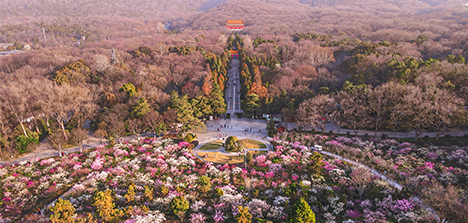
Sun Yat-sen Mausoleum
The Sun Yat-sen Mausoleum, the mausoleum of Sun Yat-sen, is located on the southern slope of Zijin Mountain. With its grand architectural design, it is one of Nanjing’s most representative modern architectural complexes.
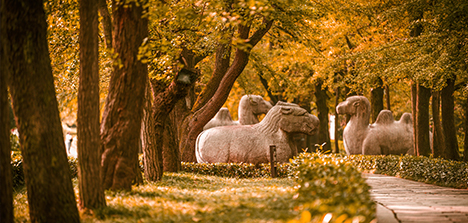
Ming Xiaoling Mausoleum
The Ming Xiaoling Mausoleum is the tomb of Zhu Yuanzhang, the founding emperor of the Ming Dynasty, and a UNESCO World Heritage Site. The Sacred Way, lined with stone statues, is especially beautiful in autumn.
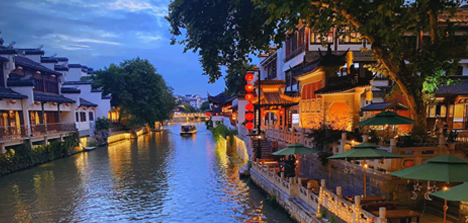
Confucius Temple–Qinhuai River
Confucius Temple and the Qinhuai River form one of Nanjing’s most famous historic and cultural areas. Take a nighttime boat ride along the Qinhuai River and experience its enchanting atmosphere of lanterns and rippling waters.
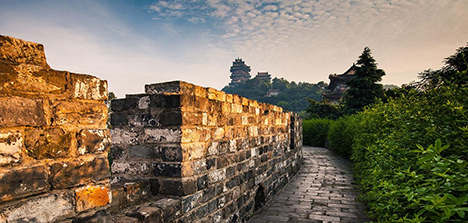
Nanjing City Wall (Ming City Wall)
The Nanjing City Wall, built during the Ming Dynasty, is the longest and largest ancient city wall in the world still in existence. Visitors can walk along the wall and enjoy views of the city, while the Zhonghua Gate is particularly impressive..
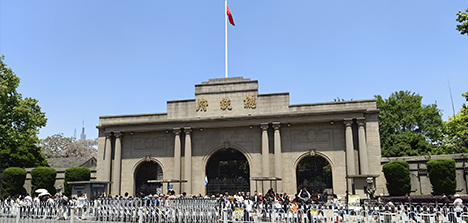
Presidential Palace
A significant landmark in modern Chinese history, the Presidential Palace once served as the Heavenly Palace of the Taiping Heavenly Kingdom and later as the Presidential Palace of the Republic of China.
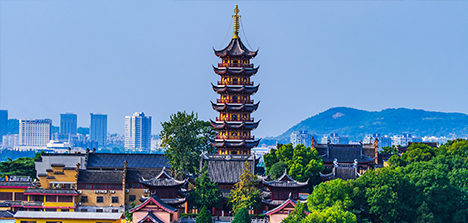
Jiming Temple
One of the oldest Buddhist temples in Nanjing, Jiming Temple is especially popular in spring, when its cherry blossom avenue becomes one of the city’s most popular spots for visitors.
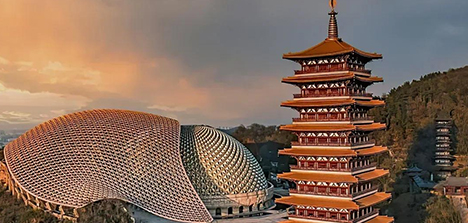
Foding Palace at Niushou Mountain
Home to a Buddhist skull relic, Foding Palace is renowned for its grand and striking architecture. It has become one of Nanjing’s most prominent cultural landmarks in recent years.
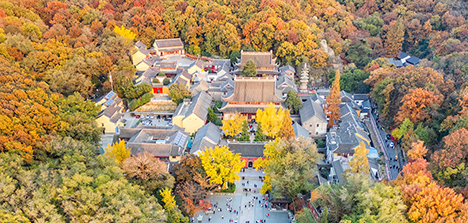
Qixia Mountain
Famous for its vibrant autumn foliage, Qixia Mountain is home to the historic Qixia Temple and Thousand-Buddha Cliff, both rich in history and cultural heritage.
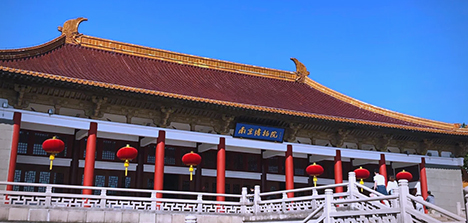
Nanjing Museum
One of China’s three major museums, Nanjing Museum houses an extensive collection that offers a comprehensive introduction to the history and culture of Jiangsu and Nanjing.
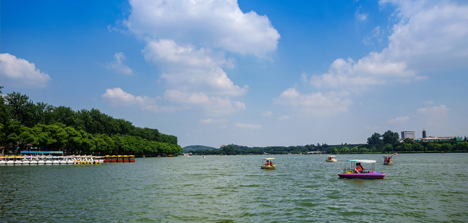
Xuanwu Lake
The largest urban park in the Jiangnan region, Xuanwu Lake lies alongside the Ming City Wall and is a popular spot for walking and cycling.
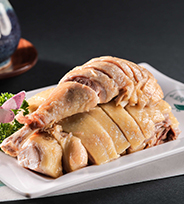
Salted Duck
Known as the “Duck Capital,” Nanjing is famous for its salted duck, one of the city’s signature dishes. It is known for its delicate skin, tender meat, and savory flavor.
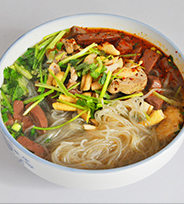
Duck Blood and Vermicelli Soup
Nanjing has a long tradition of duck cuisine, reflected in the saying, “No feast is complete without duck.” Salted duck has a history of more than 1,000 years and was praised during the Ming Dynasty as “the finest duck cuisine under heaven.”
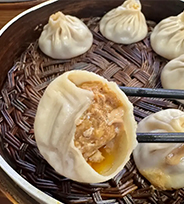
Soup Dumplings
With thin wrappers and plenty of broth, these dumplings are a classic Nanjing breakfast. Traditionally, the wrapper is opened slightly and the broth is sipped first.
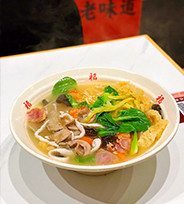
Pidu Noodles
A Nanjing specialty featuring fried pork skin that soaks up the flavorful broth, creating a distinctive texture.
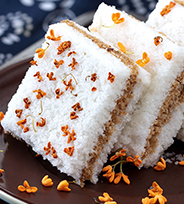
Osmanthus Cake
Made with fragrant osmanthus flowers, this soft and subtly sweet pastry is especially popular in autumn.
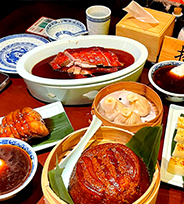
Nanjing Dapai Dang (Restaurant)
A convenient choice for sampling a variety of Nanjing snacks, including salted duck, sweet taro soup, and red bean glutinous rice balls.